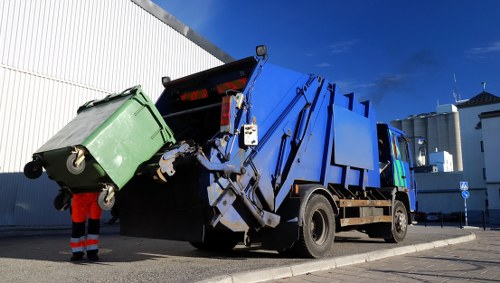
House Clearance Chelsea Health & Safety Policy
This health and safety policy sets out the standards and procedures applied by our house clearance and rubbish removal service area. It explains the management of risks associated with domestic clearance work, waste collection and disposal, and general site safety when operating as a clearance company in residential settings. The aim is to protect staff, clients and the public by ensuring work is planned, supervised and carried out to recognised safety standards.Scope and Commitments
Our commitment covers all activities involved in house clearance services, including bulky waste removal, light demolition associated with clearances, hazardous item identification and responsible rubbish disposal. We will comply with applicable safety law and best practice and apply a consistent approach across all jobs. The policy emphasises training, risk assessment and use of appropriate personal protective equipment to reduce incidents and injuries.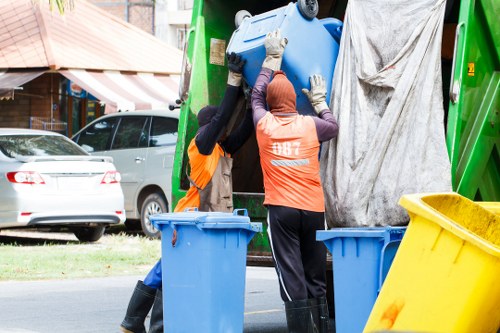
Responsibilities
The organisation assigns clear responsibilities: managers must carry out planning and supervision; operatives follow safe systems of work; and all staff are expected to report hazards and incidents promptly. Supervisors are responsible for ensuring that staff have relevant licences and that vehicle loading and unloading adhere to safety guidelines. The policy also outlines contractor and subcontractor expectations where external teams assist with clearances.Risk assessment is central to safe house clearance. Before each job, a site-specific assessment identifies physical hazards, potential biohazards, asbestos risk, sharps, chemical containers and manual handling requirements. Assessments determine the use of mechanical aids, two-person lifting for heavy items, and any specialist waste handling procedures. Where unknown hazards exist, work will be paused until safe controls are in place.
Safe working procedures include clear traffic management at properties, safe vehicle access, secure stacking of items, and controlled manual handling techniques to protect the spine and prevent slips, trips and falls. Equipment is maintained according to manufacturer guidance and inspected regularly. All staff must wear specified PPE such as gloves, safety boots, high-visibility clothing and masks when dust or biohazards are present.
 Training and competence form a continuous part of operations. New staff receive induction on waste categories, site safety, emergency procedures and manual handling. Ongoing refresher courses, toolbox talks and competency checks ensure skills remain current. Supervisors maintain training records and assess whether additional certification is required for specific tasks such as hazardous waste removal or the operation of lifting equipment.
Waste segregation and environmental safeguards are incorporated into the safety policy. Clear rubbish classification prevents cross-contamination and ensures inert, recyclable and hazardous materials are handled correctly. Disposal follows authorised routes and documentation is maintained for regulated waste where applicable. Minimising environmental impact is linked to safe handling: secure containment reduces spill and exposure risks.
Emergency procedures are defined and readily available. These include first aid arrangements, spill response, fire response and evacuation plans. A nominated first aid responder is present on larger clearances and first aid kits are kept in vehicles. Incidents and near misses are investigated to prevent recurrence, and corrective actions are recorded and monitored.
The policy also addresses client and public safety. Work areas are secured to prevent unauthorised access, and clear signage is used when necessary. Communication with householders explains any precautions they should take, such as keeping children and pets away from the work zone. Loading on public highways complies with local regulations and is done safely to protect passersby.
 Equipment and vehicle safety measures require daily vehicle checks, secure load restraint and safe reversing procedures. Mobile plant is used only by trained staff and is switched off and locked when unattended. Tools are stored securely and faults are reported immediately. Routine maintenance schedules help prevent mechanical failures that could cause accidents.
A formal incident reporting system records accidents, injuries and dangerous occurrences. Reports trigger investigations and a review of risk assessments. Where appropriate, disciplinary or retraining measures follow unsafe acts, and successful safety improvements are shared across the team to raise standards.
 Monitoring and review ensure the policy remains relevant. Management reviews performance through audits, site inspections and staff feedback, with changes implemented to reflect new legislation or evolving best practice. The approach balances practical rubbish clearance service delivery with robust safety controls. By embedding these principles into everyday operations, the company reduces risk and promotes a safe environment for staff, clients and the public.
- Key safety controls: pre-job risk assessments, PPE, training, secure waste segregation.
- Operational checks: vehicle inspections, equipment maintenance, load restraint.
- Emergency readiness: first aid, spill response, incident reporting and review.
Policy review: This document is reviewed annually or after any significant incident or change in legislation to ensure continued protection of people and the environment during house clearance and rubbish removal activities.